AI email drip campaigns that actually nurture buyers and sellers
Most real estate leads don't transact for weeks or months — yet most agents give up after three follow-ups. A well-built AI drip campaign closes that gap, sending the right message at the right moment while you focus on the deals in front of you. Here are the best tools for 2026 and the sequences that convert.
Why drip campaigns win in real estate
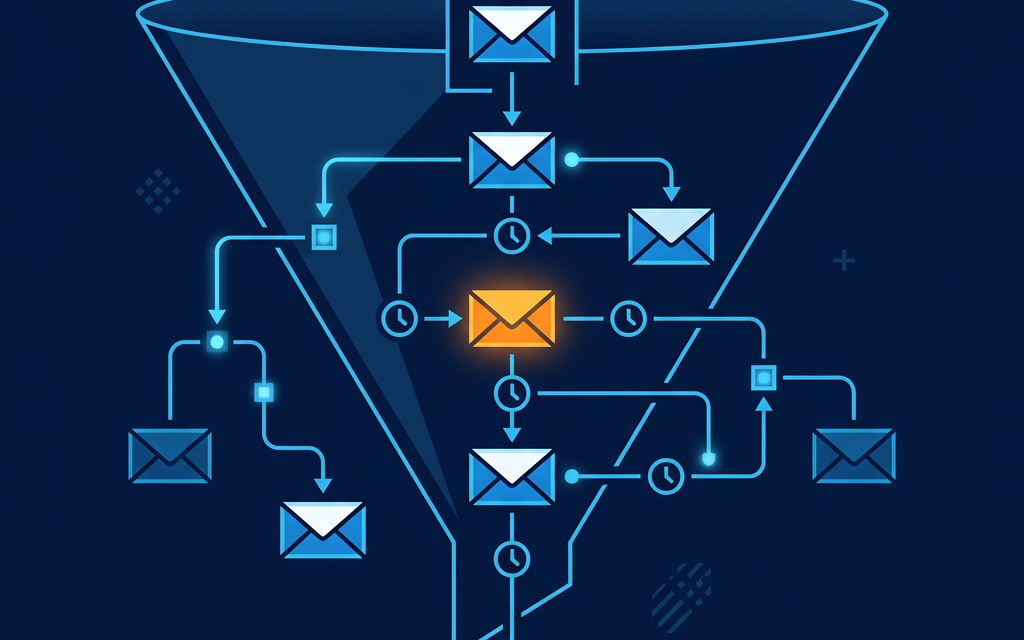
A real estate drip campaign is a pre-written sequence of emails sent automatically based on a trigger — a form submission, a property inquiry, or a downloaded buyer's guide — running in the background without manual effort (WorksBuddy). That consistency is the whole point: most prospects take weeks or months to act, and the agent still in their inbox at week eight is the one who gets the call (RealEstateToolkit.ai).
What's changed in 2026 is the "AI" part. Modern platforms don't just send on a timer — they watch behavior (which listings a lead clicked, whether they opened the financing email) and branch the sequence accordingly, and they draft the copy for you so you're not writing 24 emails by hand (RealEstateToolkit.ai). The essential sequences every agent should run: a new-lead welcome (5–7 emails), a buyer nurture (12–24 emails), a seller nurture (8–12 emails), and a post-closing sequence (6–12 emails) that turns clients into referrals (RealEstateToolkit.ai).
What to look for before you buy
- Contact-based vs. send-based pricing. ActiveCampaign charges by contacts stored (so list growth raises the bill); Brevo charges by emails sent (cheaper if you have a big list you email occasionally) (SendX).
- Behavioral branching. The difference between a real nurture and a glorified newsletter is whether the sequence adapts to what the lead clicks (Sequenzy).
- CRM integration. If your leads live in Follow Up Boss or a portal, your email tool must sync so a booked appointment pauses the drip automatically.
- Watch the tier jump. On contact-based tools, crossing a contact threshold re-prices the entire plan — budget for growth (Tomba).
The best AI email tools for real estate in 2026
ActiveCampaign From $15/mo (Starter, 1,000 contacts, annual)
The top pick for serious lead-nurture automation, thanks to behavioral automation and a built-in CRM that handle the entire journey from first inquiry through offer and post-sale referral (Hack'celeration). Four tiers (billed annually at 1,000 contacts): Starter $15/mo, Plus $49/mo, Pro $79/mo, and Enterprise $145/mo (AI:Productivity). There's no free plan — just a 14-day trial — and pricing scales with contacts, so a Plus plan rises to roughly $189–$239/mo at 10,000 contacts (Encharge). Plus is the realistic starting tier for most teams because it adds the CRM, landing pages, and lead scoring (Scribe).
Verdict: Best for agents and small teams who want segmented buyer/seller pipelines with behavioral branching. Watch the contact-tier jumps as your list grows.
Brevo Free (300 emails/day); paid from $9/mo
The best all-in-one value for solo agents and small teams — CRM, email, and SMS in one affordable tool (Hack'celeration). Brevo prices by emails sent, not contacts stored, so a big database you email occasionally stays cheap: Free sends 300/day (9,000/mo) with Brevo branding, Starter runs $9–$82/mo by volume, and Standard — the tier that unlocks automation, A/B testing, and landing pages — starts at $18/mo (SendX). For 10,000 contacts emailed four times a month, Standard lands around $69/mo (SendX).
Verdict: Best all-rounder for solo agents who want email + SMS + light CRM without a big monthly commitment. Send-based pricing rewards large, occasionally-emailed lists.
MailerLite Free up to 1,000 subscribers; paid from ~$10–$15/mo
The budget-friendly automation choice with the gentlest learning curve. MailerLite offers a genuinely usable free tier for up to 1,000 subscribers including basic automation, making it a strong starting point for a new agent building a database from scratch (RealEstateToolkit.ai). Its drag-and-drop editor and clean automation builder let you stand up a welcome sequence in an afternoon, and paid plans stay affordable as you grow. It lacks the deep CRM and predictive features of ActiveCampaign, but for straightforward buyer and seller drips it does the job for a fraction of the cost.
Verdict: Best for new and budget-conscious agents who want clean, simple automation and a real free tier before committing.
Follow Up Boss From ~$58/user/mo
The choice when your email drips should live inside your CRM, not beside it. Follow Up Boss is the real-estate-native CRM most top teams run, and its automated action plans send behaviorally-triggered email-and-text drip sequences that pull directly from your lead data — so a booked showing or a reply from the lead automatically pauses the sequence (Bounti.ai). Because it ingests leads from Zillow, Realtor.com, and your IDX site, the nurture starts the second a lead arrives. It's pricier per seat than a standalone email tool, but it removes the sync headaches of stitching a CRM and an email platform together.
Verdict: Best for teams already living in a CRM who want nurture sequences tied directly to lead activity and pipeline stage.
beehiiv Free up to 2,500 subscribers; Scale ~$43/mo (annual)
The best fit if your nurture is really a branded newsletter — a monthly market update, neighborhood spotlights, and just-listed roundups that keep you top-of-mind with your whole database. beehiiv's free Launch plan covers up to 2,500 subscribers with unlimited email sends, a custom domain, and an AI website builder; the Scale plan (about $43/mo billed annually) adds email automations, A/B testing, surveys, and monetization with a 0% take rate (beehiiv). It's built for growth and referral loops rather than one-to-one sales drips, so pair it with a CRM for transactional follow-up (CheckThat.ai).
Verdict: Best for agents building an audience-first brand via a market-update newsletter. Use alongside a CRM, not as a replacement for one.
The sequences worth building first
The tool matters less than the sequences you load into it. Start with these, in order of ROI:
- New-lead welcome (5–7 emails over 2 weeks): introduce yourself, set expectations, deliver a buyer's or seller's guide, and invite a call. This is where speed-to-lead pays off.
- Buyer nurture (12–24 emails, weekly then monthly): market education, financing reminders, new-listing alerts, and open-house follow-ups — branching on which listings they click (RealEstateToolkit.ai).
- Seller nurture (8–12 emails): triggered by a home-valuation request, this tracks price range, timeline, and engagement — the sequence that benefits most from real segmentation (Sequenzy).
- Post-closing (6–12 emails over a year): home-anniversary notes, maintenance tips, and referral asks that turn one deal into three.
One honest caution: automation amplifies whatever you feed it. A thoughtful, genuinely useful sequence builds trust at scale; a generic "just checking in" blast trains people to ignore you. Write the emails as if you were sending them one at a time to a client you respect — then let the software send them for you.
The bottom line
For most agents in 2026, ActiveCampaign is the best engine for true behavioral buyer/seller nurture, while Brevo is the smarter value if you want email, SMS, and light CRM in one cheap package. New agents should start free on MailerLite, teams already in a CRM should lean on Follow Up Boss's built-in action plans, and anyone building an audience-first brand should run a beehiiv newsletter alongside their sales drips. Whichever you choose, the winning move is the same: build the four core sequences once, write them like a human, and let them nurture every lead you'd otherwise forget.
One tested tool every week
Join free and get the AI tools that actually move listings — reviewed honestly, one at a time.
No spam. Unsubscribe anytime.